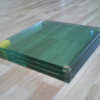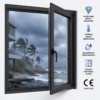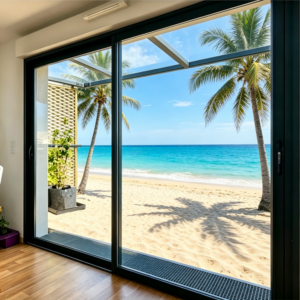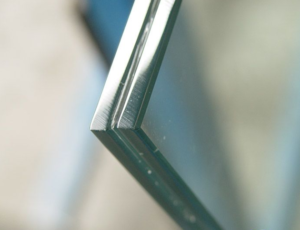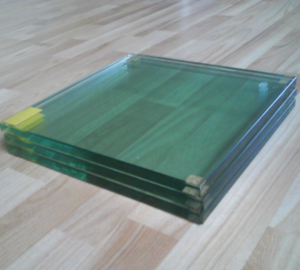
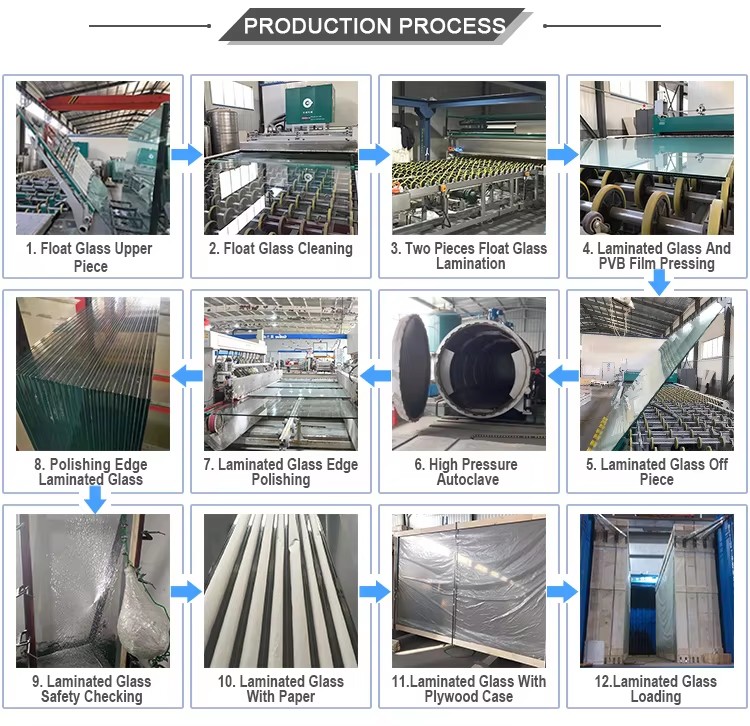
Construction: Tempered or heat-strengthened glass plies + SGP interlayer; multi-ply and insulated laminated units available
Glass Ply Thickness (typical): 4 mm, 5 mm, 6 mm, 8 mm, 10 mm, 12 mm (tempered or heat-strengthened)
Interlayer Options: SGP 0.89 / 1.52 mm (SGP preferred for high-demand impact applications)
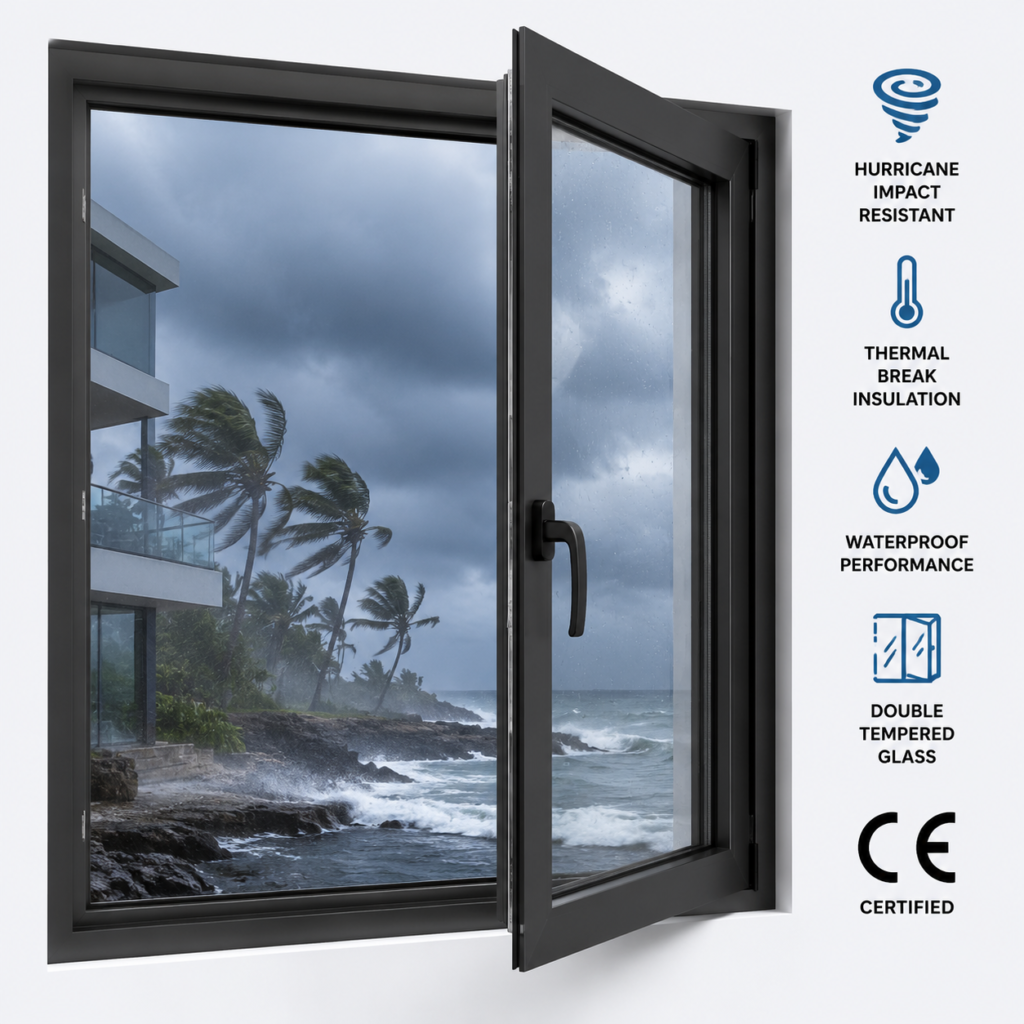
Hurricane laminated glass is specified wherever impact resistance and building-envelope integrity are required:
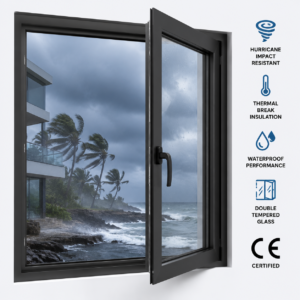
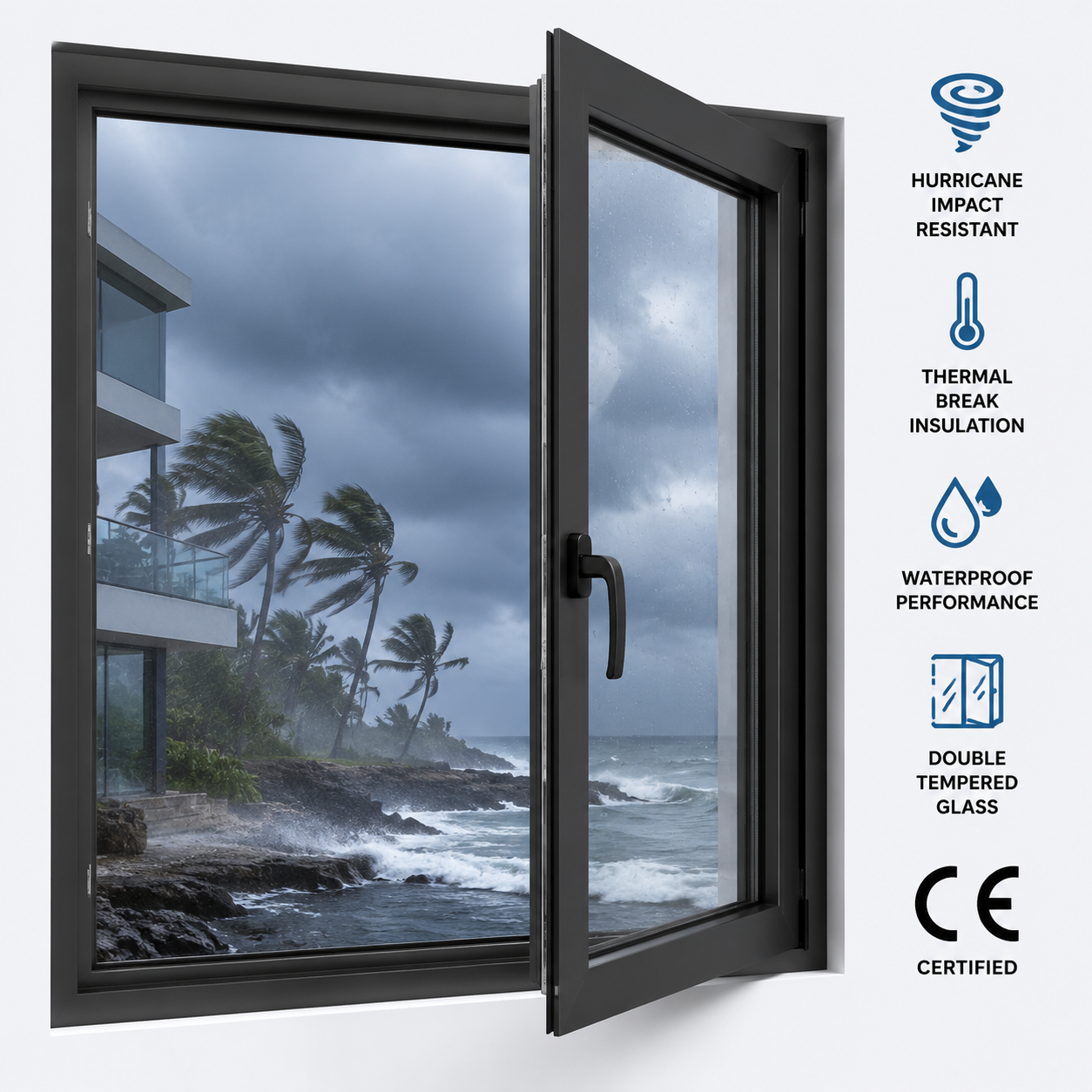
1. Wind-Borne Debris Impact Resistance Tempered plies and a tough interlayer are engineered to resist flying debris during a storm, reducing the risk of the glazing being penetrated.
2. Post-Impact Integrity After impact, the interlayer holds the glass together so the opening stays sealed and the building envelope remains intact, helping prevent wind and rain intrusion and internal pressurization.
3. Cyclic Wind Pressure Performance Engineered to withstand the repeated push-pull loading of hurricane-force winds, not just a single peak load.
4. Reduced Injury Risk Laminated construction holds fragments in place on breakage, protecting occupants from sharp falling shards.
5. Building Envelope Protection Keeping glazing intact helps avoid the cascade of damage — water intrusion, insulation failure and structural pressurization — that follows a breached opening.
6. Sound Control The interlayer dampens noise transmission, useful in coastal homes, hotels and resorts exposed to wind and surf noise.
7. UV Protection Blocks the large majority of ultraviolet radiation, protecting interiors, furniture and finishes from fading.
8. Energy Performance Options Can be combined with Low-E coatings and insulated laminated units to meet thermal requirements alongside impact performance.
9. Custom Engineering Build-ups, interlayers, tempering and framing can be configured to the project’s design pressure and impact requirements.
10. Documentation Support Test reports and approval documentation can be provided for qualified configurations to support code compliance.

Q1: What makes laminated glass “hurricane” rated?
It must resist both wind-borne debris impact and cyclic wind pressure, and hold together after impact. This depends on the specific build-up, tempering, interlayer and framing — not on lamination alone. Please request test reports for the configuration you plan to use.
Q2: Which standard applies?
Common references include ASTM E1886 / E1996 for impact and cyclic pressure, ASTM E330 for structural wind load, and Florida TAS 201 / 202 / 203 protocols with Miami-Dade NOA or Florida Product Approval. Requirements vary by region and code; confirm with your local authority.
Q3: Should I choose PVB or SGP?
SGP is often preferred for demanding hurricane applications because of its higher tear strength and stiffness, which improve post-breakage performance. PVB is a cost-effective option for less demanding builds. We can advise based on your design pressure and impact requirement.
Q4: Does laminated glass alone guarantee hurricane protection?
No. The glazing must be part of a tested system that includes the frame, anchorage and installation details. A tested glazing build-up installed in an untested or inadequate frame may not perform as rated.
Q5: Can it be tempered?
Yes — hurricane laminated glass normally uses fully tempered or heat-strengthened plies for wind-load strength, laminated with the interlayer for post-impact integrity.
Q6: Does it also provide sound and UV benefits?
Yes. The interlayer dampens sound transmission and blocks the large majority of UV radiation, adding everyday comfort and interior protection.
Q7: Can it be combined with Low-E or insulated units?
Yes. Low-E coatings and insulated laminated units are available for projects that also need thermal performance.
Q8: What information do you need for a quotation?
Please provide panel sizes, design wind pressure, required impact/approval standard, glass and interlayer preference, tempering requirement and project location. We will confirm the build-up and documentation.